LMTA has been invited to continue international collaboration with Conservatorio di Padova in the framework of new Erasmus project initiative
The Lithuanian Academy of Music and Theatre (LMTA) has been invited to participate in a new international project proposal, building on the successful experience of the Music Theatre and New Technologies (MTNT) project, funded by the European Union through Italy’s National Recovery and Resilience Plan (PNRR).
The PNRR initiative for Higher Artistic and Musical Education focuses on the internationalization of higher artistic institutions, the preservation, promotion, and dissemination of the arts beyond Italy, the integration of new technologies into artistic practice and other EU cultural priorities.
Within this framework, activities included courses, workshops, international educational programs, artistic productions, and cultural exchanges. A consortium of leading Italian institutions—including Accademia della Scala di Milano, Accademia di Belle Arti di Venezia and Verona, Accademia Nazionale di Arte Drammatica di Roma, Conservatories from Padua, Verona, Ferrara, La Spezia, Venezia, and Castelfranco (lead partner), as well as the Universities of Padua and Venice—carried out the MTNT project.
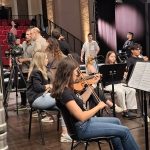
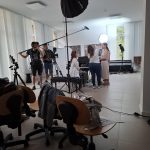
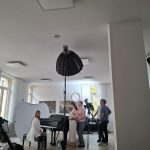
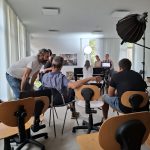
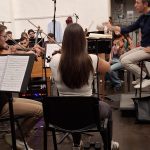
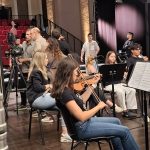
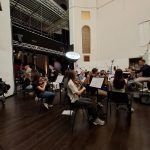
One of its highlights was the Conservatorio di Padova’s film inspired by Mozart’s Così fan tutte, which explored the themes of identity, relationships, and the intersection between artistic creation and lived experience. The project was coordinated by Professor Stefano Patarino, Conservatorio di Padova teacher and Erasmus and IR coordinator who played a leading role in designing and implementing the project.
Building on this experience, LMTA has now been invited to join the Conservatorio di Padova in developing a new project proposal within the Erasmus+ KA220 framework. The concept foresees a film production inspired by Baldassarre Galuppi’s opera Il mondo alla rovescia (The World Upside Down).
The original eighteenth-century opera, set on an island where women briefly seize power from men, delivers a moral that reflects the gender stereotypes of its time. The proposed cinematic adaptation aims to critically re-examine this message through a contemporary lens. In the project, a group of students rehearses the opera, sparking debates on gender equality that echo into their own experiences and realities.
This reinterpretation directly addresses gender equality—one of the EU programme’s cross-cutting priorities—while fostering intercultural dialogue, artistic innovation, and the international exchange of students and faculty.
As Stefano Patarino emphasized, students trained in film education, music, performing arts, opera and related fields will enrich the upcoming project with their diverse experiences.”

2025 09 16