
STARTAS Encouraged Students to Explore Entrepreneurship Through Design Thinking and Creative Collaboration

On 12–13 March, the Lithuanian Academy of Music and Theatre (LMTA) hosted STARTAS, a two-day event dedicated to fostering entrepreneurship among LMTA students and students from partner institutions of the FilmEU Alliance. The activities formed part of the C-Accelerate Plus project, which aims, among other things, to support the formation of project-based student teams that, with the help of mentors, can develop services and products with commercialisation potential. Bringing together young creatives from different disciplines and countries, the initiative encouraged collaboration, entrepreneurial thinking, and the development of innovative ideas at the intersection of art, technology, and society.
The event began on 12 March with an informal networking and introduction session. Participants had the opportunity to get to know one another, exchange experiences, and discuss project funding opportunities within their own institutions and countries. Conversations quickly revealed that many institutions face similar challenges, particularly in relation to communication and the lack of an entrepreneurial mindset in the arts. The session created space for sharing ideas, common concerns, and possible ways forward. Participants were also introduced to the FilmEU laboratories and the possibilities they offer, while LMTA’s Spatial Sound Lab presented a demonstration of its creative and technical capabilities. The evening concluded with a joint visit to the cinema “Pasaka,” where participants attended a screening of Sentimental Value as part of the Vilnius International Film Festival Kino Pavasaris.
The main programme took place on 13 March and was structured in three parts. The day opened with a creative workshop led by mentor Darius Vizbaras, a cultural producer working at the intersection of the performing arts and technology, focusing on the theme of ArtTech. The session invited participants to reflect on how they understand the relationship between art and technology and highlighted the complexity of this intersection. Through philosophical reflection as well as practical examples, the workshop explored how artistic experimentation and technological precision often operate according to different logics, yet together can become a powerful source of innovation. The discussion demonstrated that ArtTech is not simply about digital tools in art, but about the dynamic encounter between engineering and artistic thinking, where some of today’s most original creative solutions can emerge.

This was followed by three keynote presentations addressing creativity, audience engagement, entrepreneurship, and the broader ArtTech ecosystem. In “Aimless Creativity: How to Avoid Wasting Energy Creating Things No One Wants,” Edmundas Pučkorius, CBDO and event manager at Antidote.community, invited participants to think critically about audience needs and the importance of understanding demand when developing artistic ideas or products. In “From a Creative Idea to a Startup: Broader Contexts of Creativity,” entrepreneur Vytenis Buzas, CEO of Unmanned Defense Systems, spoke about startup development, entrepreneurial challenges, and the mindset needed to transform ideas into viable ventures. The keynote “Why ArtTech Matters: From Montreal to Lithuania,” delivered by Agnesta Filatovė, CEO and co-founder of ArtTech Agency Lithuania, introduced participants to the historical development of the ArtTech movement and emphasised the role of ArtTech ecosystems in shaping new relationships between art and technology.
The final part of the event was an innovation workshop combining elements of an ideathon, problemathon, and hackathon. This intensive four-hour session focused on the question: How might we create new experiences using technology? The workshop was led by Dovilė Končak, a business strategist and mentor with experience in business development, market research, innovation, and leadership. Rather than focusing on rapid technical prototyping, this format encouraged participants to identify, define, and refine relevant challenges in the cultural and creative sectors. Working in teams and supported by mentor, students developed ideas for services and products with commercialisation potential, while strengthening their problem-solving, collaboration, and innovation skills. The format placed particular emphasis on critical thinking and problem-framing as key competences for young artists and creative professionals.
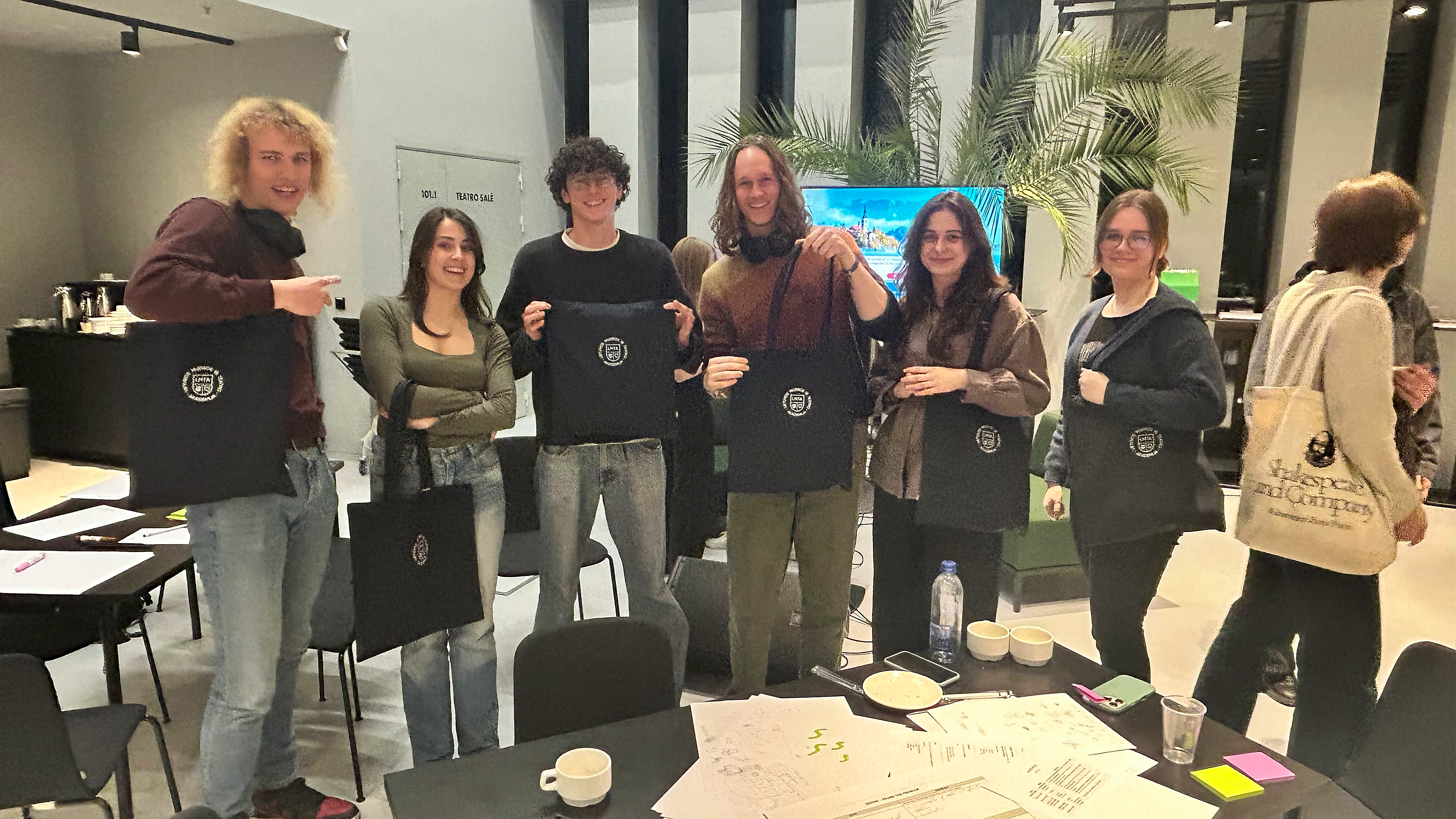
At the end of the workshop, four student teams presented their final concepts. The team “Le 6” proposed an interdisciplinary exhibition designed to help contemporary audiences reconnect with the value of art in an overstimulated society. Their concept combined artistic experience with elements of wellbeing, natural environments, and sensory practices that encourage visitors to slow down before engaging with artworks. This team received the main workshop prize – a six-month mentorship package.
“Sibelius” presented a therapeutic classical music experience in virtual reality, aimed at teenagers and focused on fostering emotional intelligence and empathy through immersive sound, AI guidance, and personalised digital environments. This team was awarded second prize, consisting of a five-hour consultation package with the workshop mentor.
The team “5 Musketeers” introduced the concept of a multisensory exhibition combining image, sound, and future-oriented artificial intelligence technologies. Finally, the team “Houston” introduced “Spinner Festival,” an interactive music festival concept in which audiences would actively participate in the creation of live improvised music alongside jazz performers.
By bringing together students, mentors, speakers, and partner institutions, STARTAS created a space where artistic creativity met entrepreneurial thinking and interdisciplinary experimentation. As part of C-Accelerate Plus, the event contributed to the formation of project-based student teams and supported the development of ideas that could be further refined into commercially relevant services and products. It also highlighted the importance of equipping young artists not only with creative skills, but also with the ability to recognise challenges, understand audiences, and shape ideas with real potential for impact and further development.
2026 03 20