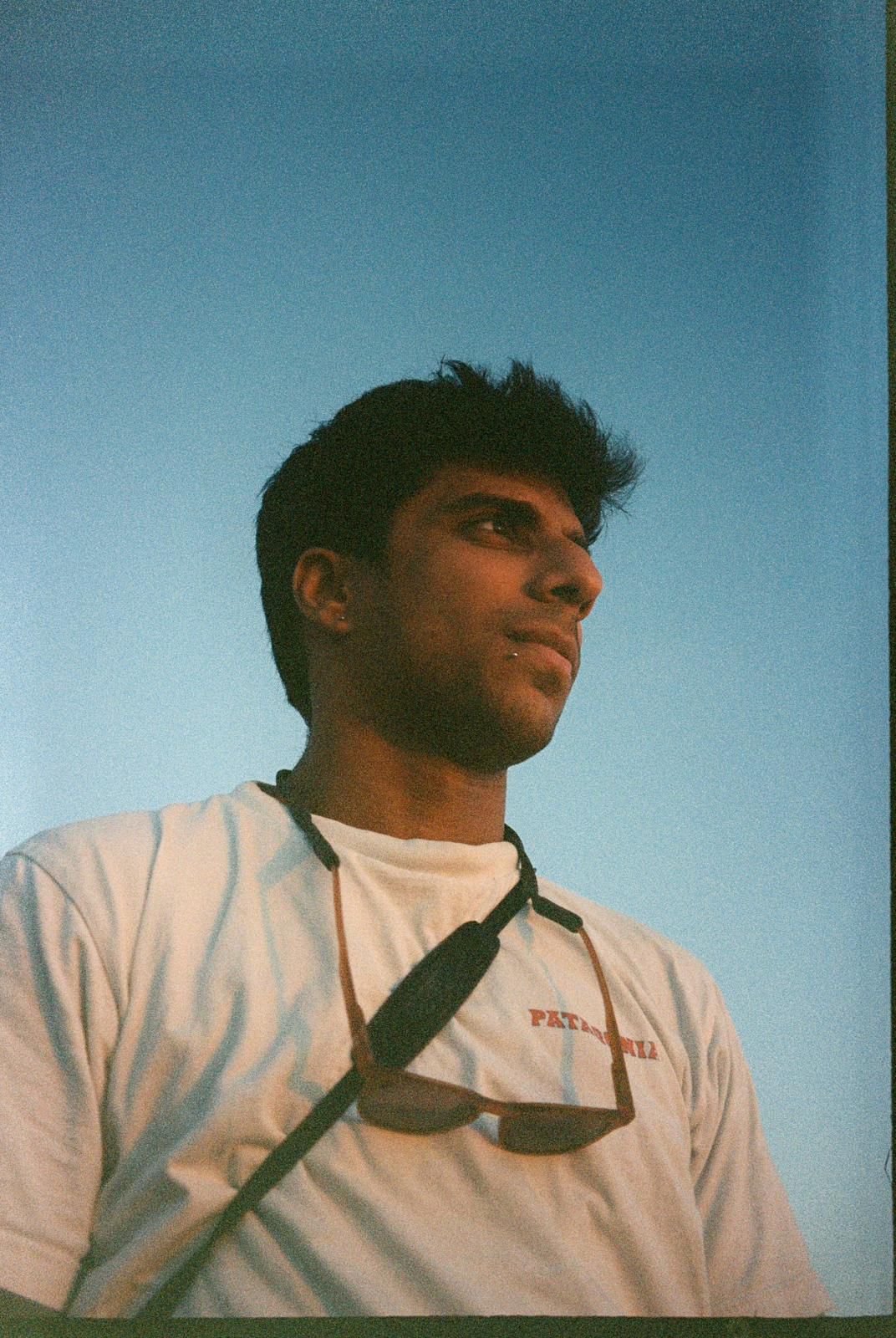
DocNomadsPLUS student Mohit: any experience helps
Mohit comes from India—a country where colors shine, culture is vibrant, and people are no strangers to emotions, melodies, and rhythms that make you want to move. This is also where Bollywood was born. India is a frequent destination for people seeking self-discovery. Perhaps it’s no coincidence—the country is rich in sunshine, wild nature, and wildlife, and its people have preserved their traditions and maintain a strong connection to their gods.
Now, as a student in the DocNomads joint master’s program, Mohit is getting to know Vilnius and looking for storylines and characters here. How is his experience studying in Vilnius, and does studying at KIMO differ from studying at Lusófona University in Lisbon?
Kismar Rosin, an intern from Estonia, spoke with Mohit and wrote this article.
So—you are from India. When we studied at the Baltic Film and Media School in Tallinn, we learned about Indian theatre and dramaturgy—about color, emotion, movement. For us, it was so fascinating, so different. When I listen to you, you see Soviet films as poetic and beautiful—but as an Estonian, I feel tired of them. I’d rather watch Indian films.
“I know exactly that feeling. They showed us an Indian film here, and I said the same thing—I’m tired of seeing the same stories about my country repeated again and again.”
“And I think we almost fetishize each other’s cultures—seeing them through a very narrow keyhole.”
What do you mean?
“I have a limited perspective. It’s an entry point—but being here for five or six months, making a film, you can only go so far into a culture. It’s very different from someone who grew up here.”
“I can understand it—but I may not be able to experience it viscerally. And I can say the same about representations of India.”
“India is much bigger—not just in size, but in people and culture. It’s incredibly diverse.”
You have participated in the Doc Nomad program and also lived and worked creatively in Lisbon. How different has it been?
“In Lisbon, it’s a bigger, more diverse city. But the schools are very different—they each have their own identity.”
“Lisbon focused more on observational cinema. It was also the beginning of the journey—everything felt like a wave, a rush.”
“And now, we’re more settled. More seasoned in the Doc Nomads culture.”
Who would be the perfect person for the Doc Nomad program?
“A lot of people from my country or South Asia reach out to me before applying, asking what I think.”
“I feel like it’s somewhere between knowing how to make a film and not knowing.”
“If you come without any experience—or without expectations—it can be difficult. Moving itself is hard. You’re in a non-English-speaking country, you have classes, and you have to figure out life at the same time.”
“Documentary filmmaking is about curiosity—going out, meeting people. And that can be overwhelming.”
“On top of that, there are technical challenges—camera, tripod, everything.”
“For me, it was easier because I had some experience before coming.”
What kind of experience?
“Not directing—more technical experience. But really, any experience helps. Life experience.”
Life experience, yes.
“You’re meeting real people—it can be nerve-wracking. You’re constantly outside your comfort zone. And at the same time, you’re trying to settle into a new culture.”