Sorry, but this page is only available in Lithuanian.
For more information about LMTA events in English, check out the Events section on our front page (below the News section).
Our site uses cookies to ensure you quality of service. By continuing browsing you agree with our Cookie policy , Privacy policy
News
New financing for the „Nordplus Norteas“ network
We are pleased to share that “Nordplus NORTEAS” – a network uniting Nordic theatre arts schools, coordinated by LMTA for the three years – has received significant funding this year amounting to EUR 75,790 for short-term mobility opportunities for teachers and students, as well as for a development project titled “Intersectoral Pedagogy.”
The network currently brings together 18 higher education institutions from the Nordic region – ranging from Greenland and Iceland to the Scandinavian and Baltic countries.
We are also delighted to announce another important update – LMTA has renewed the NORTEAS website: https://www.norteasnetwork.org. The website now provides comprehensive information about the activities of the “Nordplus” network, examples of best practices from previous projects, mobility opportunities, and contact information. We hope this information will be useful for everyone interested in learning more about the network’s activities, sharing experiences, participating in collaborative initiatives, and engaging in international projects.
We invite you to actively make use of the opportunities offered by the network and to follow the latest news on the renewed NORTEAS website.
International Relations info
2026 05 18
MAY 2026 | LMTA EVENTS
Sorry, but this page is only available in Lithuanian.
For more information about LMTA events in English, check out the Events section on our front page (below the News section).
Call for Proposals — C-Accelerate+
Join C-Accelerate+, a FilmEU alliance initiative boosting entrepreneurship and innovation across arts, culture and creative industries in higher education. We offer individual mentorship and practical support to student teams aiming to develop start‑ups, creative projects and art‑tech solutions with real market potential and institutional backing.
Who can apply?
- Students from partner institutions — individuals or teams.
- Open to ideas at any stage: concept, prototype or early venture.
What we offer?
- One‑on‑one mentorship with experienced industry mentors.
- Practical guidance on business development, prototyping, testing, and partnership building.
- Access to international networks, workshops and targeted consultations to accelerate your project beyond the classroom.
Current project you can join:
- Le 6: an interdisciplinary exhibition creating a slow, naturalistic sensory environment to rethink overstimulation.
Selected mentors:
- Darius Vizbaras — cultural innovation producer, founder and MD of KOSMOS THEATRE, and Creative Director of ArtTech Forum Lithuania; experienced in interdisciplinary R&D, XR, AI and international project delivery, and active in professional education and mentorship.
- Vytenis Buzas — aerospace engineer and entrepreneur, lead developer of Lithuania’s first nanosatellite LituanicaSAT-1, former NanoAvionics CEO and current head of Unmanned Defense Systems.
- Mantautas Krukauskas — composer and sound artist, Associate Professor at the Lithuanian Academy of Music and Theatre and co‑founder/head of the Music Innovation Studies Centre, an academic lab focused on music technology, interactive arts and immersive media; active in composition, electronic performance and leading international research and educational programmes.
- Roberto Becerra — sound artist, engineer and technologist; co‑founder of Ideas Block LT and the Arttice cultural platform, and lecturer/developer at the Lithuanian Academy of Music and Theatre, working across creative tech and multidisciplinary arts.
- Edmundas Pučkorius — entrepreneur and cultural sector leader active in initiatives such as Antidote Community and SEMIHUMAN, with experience collaborating with municipal and cultural stakeholders.
How to apply?
- Submit by filling a short form: Open Call for Mentorship – C. Accelerate+ – Fill out form
- Deadline: May 15
Have questions for us? Contact matas.samulionis@lmta.lt; neringa.valuntonyte@lmta.lt
Apply to get tailored mentorship, practical support and a fast track from idea to market‑oriented development.
2026 04 29
DocNomadsPlus student Astrid: „You have to be curious about life“
Astrid Felicia comes from Norway—a Northern Norwegian city that is no stranger to darkness, wind and dropping temperatures. Also Peer Gynt, trolls, Freikenstulen, and magnificent mountain views. A land now experiencing a kind of cinematic wave, led by Oscar-nominated director Joachim Trier.
But now, as a DocNomads Plus, an Erasmus Mundus joint master student, Astrid is trying to find stories in Vilnius. Together with her peers at DocNomads Plus, they are in the phase of searching for documentary characters. How she feels in Vilnius and studying in KIMO – as asked and written down by Kismar Rosin, an intern from Estonia.
The sun sets quietly on the stairs of the National Lithuanian Film School. Artsy theatre students share rolled tobacco, inspiration, youth, and potential. In Vilnius, where church bells toll, you can hear silence in the parks near Užupis. The city plays with green, brown, and reddish tones.
When Astrid tries to find a metaphor for Vilnius, she pauses, then says: pickles.
“They keep you nourished through the winter, and honestly, I’ve never had so many good pickles as I’ve had here,” she adds.
Thanks to the National Film School (KIMO), Astrid and her mates have seen many Lithuanian films. They are also taking a course on Baltic poetic cinema.
It has been a revelation for her—she hadn’t seen any Lithuanian films before. Before DocNomads, she completed an arts degree.
So how does Norwegian cinema compare to Lithuanian cinema?
“It’s quite recent that Norway has produced films reaching an international audience. In many ways, Norway has been the Scandinavian underdog in filmmaking. Historically, there hasn’t been the same level of commitment to cinema as in Lithuania.”
“There’s a kind of coded poetry in Lithuanian films. Norwegian films tend to be more direct—sometimes even a bit on the nose. Of course, that comes from a completely different historical context.”
“Less poetic—well, until recently. Now they’re actually pretty good.”
Moving countries every six months can feel unsettling, like you never quite reach beneath the surface of a culture. If you stay in one place, after two years you might reach a certain depth—but being an outsider is always limiting, she notes.
“I think you can do it a few times, but maybe you don’t want to work like this forever.”
What does she think of Lithuanians?
“I think they’re quite quirky.”
Quirky?
“In the sense that they are very in touch with their roots. As part of my research, I’ve been exploring Lithuanian paganism. I think I’ve been seeking out unusual corners of society.”
There is a strong connection to cultural history and pre-Christian faith.
Curious, she attended several events.
Astrid experienced Užgavėnės, an ancient celebration where people wear masks and burn a figure called More, marking the end of winter and the arrival of spring.
“Where I’m from, we’ve mostly lost touch with many of these pre-Christian traditions, so I’ve really appreciated taking part in them here,” she explains.
She also attended folk singing concerts and the spring equinox celebrations with Romuva.
But what’s fascinating is not just studying in different places—it’s that the students themselves come from all over the world, bringing diverse perspectives.
“Yeah, I think it’s great. You’re constantly challenged by your peers. The discussions are much richer, shaped by very different points of view compared to my previous degree.”
What kind of person should apply to become a documentary nomad and join DocNomadsPlus programme?
“You have to be curious about life. If you’re not curious, you won’t get much out of it.”
“Very soon after arriving, you realize you are your own driving force. The only way to find inspiration and meet people is to immerse yourself in society—without judgment and with an open heart. You have to be ready to step out of your comfort zone.”
“And I think it helps to be independent—and to have a bit of baggage.”
A bit of baggage?
“Life experience. I would recommend waiting with the course until you’ve lived a little outside educational institutions.”
What about the silence of Vilnius—what does it say?
“The silence perhaps represents resilience.”
Lithuanians have a turbulent history, yet there is a sense of strength and unity.
After answering, Astrid rushes off to her lectures. Another day begins—searching for stories. Characters. Moments. Life. Meaning. Trying to capture all of this essence on camera.
More about an Erasmus Mundus Joint Master in Documentary Filmmaking read here.
APRIL 2026 | LMTA EVENTS
Sorry, but this page is only available in Lithuanian.
For more information about LMTA events in English, check out the Events section on our front page (below the News section).
Inclusion at LMTA: Experiences That Bring Students Together
On 5 March, the Education Exchanges Support Foundation (Lithuania) organised a meeting of international relations coordinators from Lithuanian higher education institutions at Panevėžys College, focusing on the theme “Inclusion and Diversity in the Erasmus+ Programme.” During the event, Rima Rimšaitė, Head of the International Relations Office at the Lithuanian Academy of Music and Theatre (LMTA), shared the Academy’s experience.
According to Rimšaitė, while at first glance the Academy’s activities in the field of inclusion may not seem exceptional, a closer look reveals a consistent and diverse range of initiatives. One example is the intensive one-week course “Introduction to Lithuanian Culture,” offered to Erasmus and other international students at the beginning of each semester. The course introduces students to Lithuanian music, theatre, cinema, and traditional culture, and includes practical activities such as dance improvisation sessions.
A strong sense of community is also fostered through student-led initiatives. At the end of each semester, Erasmus music students present a joint concert. Throughout the semester, they collaborate on developing the programme, rehearse together, and ultimately deliver a public performance. This process not only strengthens creative collaboration but also helps build meaningful connections among students.
Inclusion-related activities are also actively organised at the National Film School (KIMO), where a variety of community events take place. These initiatives are driven by a desire to connect, to better understand one another, and to share cultural experiences. One notable example is the Shrovetide (Užgavėnės) celebration, which brought together students from different countries and featured traditional food, dancing, and a lively sense of togetherness. Students from the joint programme “DocNomads” responded very positively to this initiative and expressed interest in future activities.
Looking ahead, LMTA plans to further expand its community-building initiatives, including Easter egg-rolling events, a community gardening project, and the continuation of popular activities such as Šoblė Club meetings, quizzes, table football tournaments, and other events that foster engagement and connection.
International Relations Office
2026 03 17
NEW EDITION LMTA JOURNALS – NOW IN OPEN ACCESS!
The Lithuanian Academy of Music and Theatre invites you to get acquainted with the latest issues of its scholarly journals – “Lithuanian Musicology” No. 26 (2025) and “Ars et praxis” No. 13 (2025), whose electronic versions have already been published in open access on the LMTA journals’ website.
“Lithuanian Musicology” No. 26 (2025)
The twenty-sixth volume seeks to expand the prevailing paradigm of music research by transcending state borders and focusing on geographically and culturally diverse micro-, meso-, and macro-regions in music history. This approach stands in contrast to nationalism, that is, a concept of music history based on today’s state borders and an ethnocentric perspective. The shift in perspective encourages careful exploration and interpretation of the localization and networking of musical phenomena, as well as the cultural areas of musical genres and practices—from small homelands (microregions) to global contexts.
“Ars et praxis” No. 13 (2025)
The thirteenth issue of the journal Ars et praxis publishes eleven articles written by researchers, educators, doctoral candidates in science and the arts, and alumni of the Lithuanian Academy of Music and Theatre (LMTA) and other Lithuanian scientific and research institutions. Traditionally, these texts are divided into theoretical and practical sections – ars and praxis. However, contemporary scholarly and artistic research is often characterized by such a creatively analytical perspective that many of the texts in this issue—both those presenting historical phenomena and those examining the newest means of expression in contemporary culture—can be viewed as fusions of theoretical and practical perspectives.
We invite you to read and share: žurnalai.lmta.lt
Research Center
2026 03 05
EPI.LAB: The First Forum Exploring the Future of Episodic Content and Inviting Screenwriters to Submit Ideas
March 26–29, the LMTA National Film School (KIMO) and the association AVAKA are organizing the episodic content creators’ forum EPI.LAB. Audiovisual content creators are invited to attend the forum’s open presentations and discussions, while screenwriters are invited to participate in a script development workshop.
The new initiative “EPI.LAB” aims to bring together screenwriters, dramaturgs, producers, and broadcasters and to encourage the growth of episodic content in Lithuania. During the EPI.LAB forum, organized for the first time in Lithuania, representatives of the audiovisual industry will discuss trends in episodic content, share insights, strengthen professional connections important for the future development of episodic content. The program includes discussions and presentations by Lithuanian and international experts in episodic content.
The head of the LMTA National Film School (KIMO), Vytautas Dambrauskas, emphasizes that EPI.LAB seeks to respond to the growing needs of the industry: “As new generations of creators emerge, we aim to address the needs of the entire audiovisual industry, and this is how the idea was born to create a platform that nurtures screenwriters in Lithuania by drawing on both Lithuanian and international practices. The ‘EPI.LAB’ forum and laboratory will provide screenwriters with a unique opportunity to work with renowned professionals such as Susan Stanton and Philip Shelley. We are pleased that the new spaces of the LMTA National Film School open up additional opportunities not only for students but also for the entire film industry. In this way, we become a place where new connections are formed and directions for collaboration are developed.”
During the forum, the EPI.LAB script development laboratory will also take place, during which the authors of selected series ideas will develop their projects with mentors: Susan Stanton (USA), screenwriter and producer of the HBO series “Succession,” and Philip Shelley (UK), head of the Channel 4 screenwriting course.
At the end of the forum, a presentation (“pitching”) of new series ideas will take place. Screenwriters will have the opportunity to gain visibility for their projects, receive mentors’ insights and recommendations for creating series, and gain valuable contacts in the field of episodic content creators. Registration for the laboratory selection has already begun – screenwriters are invited to submit series ideas until March 15: https://forms.gle/5JA2ZQGiu2VamMpR9
The organizers hope that the forum will become an important meeting platform for audiovisual industry professionals seeking creative impulses, partners, and new ideas:
“It is encouraging to see the partnership between the LMTA National Film School and the association AVAKA, focused on industry growth and strengthening the series creation process. Both the National Film School and AVAKA bring together and nurture film and television creators, therefore ‘EPI.LAB’ becomes an important platform that provides creators with opportunities to purposefully improve professionally,” says Darius Vaitiekūnas, director of the AVAKA association.
The event is organized by the LMTA National Film School (KIMO) together with the association AVAKA. The event partner is the Creative Europe Desk Lithuania.
More information and registration: kinas.lmta.lt/epilab.
The full forum program and registration will be announced soon.
2026 03 04
KOVAS 2026 | LMTA RENGINIAI
2026 m. KOVO mėn. LMTA renginiai
*Informacija ruošiama
SVEČIAS IŠ DANIJOS: KRESTEN OSGOOD MEISTRIŠKUMO PAMOKA
Multiinstrumentalistas, prodiuseris, radijo laidų vedėjas
Organizatorius: LMTA Džiazo katedra
2026 m. kovo 9 d., pirmadienį, 15 val.
LMTA Studijų miestelio Šokių salėje
MEISTRIŠKUMO KURSAI „BALANCHINO NEOKLASIKINĖ ESTETIKA: NUO TEORINĖS ANALIZĖS IKI MOTERIŠKOS VARIACIJOS ĮKŪNIJIMO“
Kursus vadovė – Neli Beliakaitė
Organizatorė, techninė padėjėja – Rūta Kudžmaitė-Daraškevičienė
2026 m. kovo 14 d., šeštadienį,
LMTA Didžiojoje salėje
KETVIRTASIS RESPUBLIKINIS JAUNŲJŲ DAINININKŲ KONKURSAS,
SKIRTAS VALENTINO ADAMKEVIČIAUS 100-ŲJŲ GIMIMO METINIŲ ATMINIMUI
Dalyvių registracija iki kovo 4 d.
https://lmta.lt/renginys/ketvirtasis-respublikinis-jaunuju-dainininku-konkursas-skirtas-valentino-adamkeviciaus-100-uju-gimimo-metiniu-atminimui/
2026 m. kovo 26 d., ketvirtadienį, 18 val.
LMTA Didžiojoje salėje
KONCERTUOJA LMTA PIANISTAI
https://lmta.lt/lt/renginys/koncertuoja-lmta-pianistai-2/
2026 m. kovo 30 d., pirmadienį, 12–19 val.
2026 m. kovo 31 d., antradienį, 10–17 val.
LMTA Juozo Karoso salėje
PROF. KRISTIAN ATTILA (SUOMIJA) OPEROS IR LIED INTERPRETACIJOS MEISTRIŠKUMO KURSAI§
Organizatorius: LMTA Koncertmeisterio katedra
SALIŲ ADRESAI:
LMTA Didžioji salė (Gedimino pr. 42, Vilnius)
LMTA Juozo Karoso salė (Gedimino pr. 42, Vilnius)
LMTA Studijų miestelis (Olandų g. 21A, Vilnius)
LMTA Jazz cechas (T. Kosciuškos g. 10, Vilnius)
Renginiai nemokami, išskyrus kitaip pažymėtus.
Lietuvos muzikos ir teatro akademija pasilieka teisę keisti renginių programą.
menas@lmta.lt
www.facebook.com/lmtamenocentras
Take part in LMTA Career Day’s 2026 new workshop – problemathon
We invite you to take part in the LMTA Career Day STARtas 2026 on March 12–13, where one of the central program elements will be an innovation workshop in a problemathon format, hosted together with our partners ArtTech Agency.
ArtTech Agency works at the intersection of art, technology, and innovation, focusing on developing creative ideas into sustainable projects and helping creators navigate intellectual property, entrepreneurship, and new production models. Their experience in bridging the creative and innovation ecosystems will shape both the structure and mentoring approach of this workshop.
The problemathon will be preceded by three keynote/workshop sessions that will serve as an introduction and conceptual framework for the innovation workshop:
- Edmundas Pučkorius, CBDO and event producer, Antidote.community – on the process of creating an art “product” and collaborative creative practices;
- Agnesta Filatovė, Head of ArtTech Agency – on defining the “why” and shaping ideas for development;
- Vytenis Buzas, entrepreneur and startup founder – on creativity and its relationship with business and entrepreneurship.
Unlike a classic hackathon, this workshop will focus on identifying, framing, and refining relevant challenges in the creative and cultural fields. Participants will work in small teams, combining rotating group phases (to cross-pollinate perspectives) with more stable team work. The process will be supported by a professional moderator and mentors.
Following the workshop, a selected number of teams will receive mentorship packages aimed at further developing their ideas toward intellectual property (IP) registration and practical implementation.
Additionally, once we know the number of visiting students, we are planning to invite them to a financing-focused workshop in the morning and a networking session on the evening before the main event, to encourage deeper exchange and collaboration.
Registration for the innovation workshop (problemathon) is available here: Registration to LMTA Career Day — STARtas 2026 – Fill in form
We believe this format is especially valuable for students and young professionals in the arts, as it strengthens not only innovation skills, but also critical thinking, collaboration, and problem-framing competences.
We would be very happy to welcome your institution and representatives to join this initiative and meet our students during the event.
2026 02 27
2025 Internationalization Awards Celebrated at the LMTA Senate
On February 18, the Senate of the Lithuanian Academy of Music and Theatre (LMTA) hosted the 2025 Internationalization Awards. The ceremony honored 12 prominent members of the Academy’s community – professors, students, and staff – whose dedication has significantly strengthened the international standing of the LMTA.
Award Laureates:
-
Prof. Valentinas Masalskis (Klaipėda Faculty, Department of Theatre) – for his consistent and dedicated work with students from Ukraine under the Erasmus+ KA171 mobility program and for the longest “green” travel journey.
-
Prof. Aleksandra Žvirblytė (Music Faculty, Department of Piano and Organ) – for an Erasmus+ teaching visit to Taiwan and a performance with the Tainan Symphony Orchestra.
-
Assoc. Prof. Giedrė Kirkilė (Theatre and Dance Faculty, Department of Dance and Movement) – for the top-rated dance improvisation seminars by international students within the Introduction to Lithuanian Culture module.
-
Assoc. Prof. Laimonas Masevičius (Music Faculty, Department of Wind and Percussion Instruments) – for the successful implementation of the Erasmus+ BIP program CEAMTE.
-
Assoc. Prof. Jarūnė Barkauskaitė (Music Faculty, Department of Piano and Organ) – for the successful coordination of the international Cantatas project in collaboration with partners in Dresden.
-
Lector Francisco Roberto Becerra Bravo (Music Faculty, Department of Composition) – for organizing the Nordplus intensive courses LIVE SPACE.
-
Jurga Gluskinienė (Coordinator at the National Film School (KIMO)) – for the diligent and sincere coordination of the Nordplus NordFilm network and the Nordplus Creative Camp.
-
Vaiva Marozienė (Art Centre Concert Coordinator) – for the visual design and update of the English-language study programme catalogue.
-
Airė Kulbickaitė (3rd-year Bachelor student, Music Performance – Jazz Bass Guitar) – for exceptional activity during her Erasmus+ studies.
-
Simonas Miknius (4th-year Bachelor student, Music Performance – Piano) – for exceptional activity during his Erasmus+ studies.
-
Dmitrijus Andriušanecas (2nd-year Master student, Art of Dance) – for meaningful participation in Erasmus+ short-term mobility projects.
-
Klaudijus Zajančkauskas (2nd-year Master student, Music Performance – Singing) – for successful participation in Erasmus+ short-term mobility projects.
We extend our gratitude to the laureates for their contribution to the Academy’s global openness and hope that these achievements will inspire the entire LMTA community toward new international discoveries.
International Relations Office
2026 02 23
ÉCOLE DES ÉCOLES Meeting in London: Key Decisions and Future Plans
On February 12–13, the annual General Assembly of the European theatre schools network ÉCOLE DES ÉCOLES (EdE) took place at the Guildhall School of Music & Drama in London. The association currently brings together 15 of the most renowned European theatre schools, geographically distributed across Europe. LMTA was represented by Žilvinas Vingelis, Head of the Acting and Directing Department, and Giedrė Kabašinskienė, International Relations Officer.
Having previously operated without a clear legal structure, the EdE association is now entering a new phase: it has become a registered non-profit organization in Brussels. The London meeting focused extensively on the association’s development, strengthening its governance structure, and expanding international cooperation.
The Assembly also discussed the possibility of granting formal membership to a non-EU institution — the Kyiv National I. K. Karpenko-Kary Theatre, Cinema and Television University. It was decided that this issue will be further examined at the next General Assembly.
The main objective of the EdE association is to develop educators in the performing arts (primarily drama schools), promote the exchange of pedagogical experience, organize seminars and training sessions, and create an international platform for teacher mobility.
Upcoming Events and Initiatives
From March 9–13 this year, a seminar for teachers entitled “The Citizen Chorus” will take place in Brussels at INSAS (Institut National Supérieur des Arts du Spectacle). The seminar will bring together representatives from various EdE schools, including a lecturer from the Ukrainian university, who will receive an INSAS Erasmus mobility grant.
It was also decided that the next General Assembly will be held on February 11–12, 2027, in Milan at the Scuola di Teatro Filodrammatici. The potential membership of the Kyiv university in the ÉCOLE DES ÉCOLES network will also be discussed there.
Upcoming EdE Teacher Seminars
- November 3–7, 2026 – KHIO (Oslo National Academy of the Arts), Oslo (theme: inclusion);
- April 5–10, 2027 – Lithuanian Academy of Music and Theatre, Vilnius (“How to Guide Without Control? Methods of Ethical Supervision in Artistic Research…”).
The EdE network continues to strengthen international cooperation, expand partnerships, and create long-term professional development opportunities for European theatre educators.
LMTA International Relations info
2026 02 19
Events
Lecture by the duo “Moreskinsound”: “Recalling New Rituals”
LMTA Balcony Theatre (Gedimino Ave. 42, Vilnius)
Moreskinsound is a duo of musician/writer David Toop and performance and visual artist Ania Psenitsnikova. We explore extremes of stillness, working with space, presence and the intensity of punctuated silence and its impact on bodies. Our work encompasses live performance using found objects and instruments, flutes, aerial movement and inactions. We also enact non-public events in remarkable spaces, in sea caves, clifftops and alien landscapes. For our lecture – Recalling New Rituals – we will talk about what we call fluidity of practice, an improvisational approach to exploring space through movement and sound. For many people, their engagement with place has become an Instagram opportunity. How then to enter more deeply into the spirit of a place in order to create new rituals? Part of this story comes from our past works and research into Siberian and Yanomami shamanism, Japanese Butoh and improvisation. We work with humble materials, avoiding theatre and melodrama. The important point is how to enter a space and how to leave without a trace.
Inactions, we call our non-public events. As modern rituals they search for ways of communicating with spaces by using aspects of the body to sense what intention the space has and how it affects the body. A space of interest speaks to us; we listen and respond, silently entering the space, not in order to create a spectacular action but simply in order to be. A transformation takes place, making the space into a memory that stays with the body, stays with the sound.
As Ji Yun, the imperial librarian, wrote in the late 18th century, in A Note On Conjured Spirits: “And spirits can do nothing, say nothing on their own. They need a foreign agent. Yes, it is true that our ancestors tossed twigs and dried-out turtle shells in the dirt to peer through time. But such dim things had no magic on their own. It was only when they were touched with human hands and brushed with human intent that power flared in them.”
BIOGRAPHY
Since 2023 Moreskinsound public performances have included the National Gallery London, Prague, Basel, Tartu, Volume Festival Sydney, Punkt Festival Kristiansand, Edinburgh and Glasgow, Tokyo, Fukuoka, Kyoto, Nagasaki, Tatsuo Mingei Museum, Nagano. Non-public events, described as inactions, have been recorded in Cornwall, Australia, Norway, Kunisaki Peninsula, Japan, a cave of bats in Krabi, Thailand, and the ancient and silent Viru peat bog, Estonia. All of these activities can culminate in workshops which explore improvisation, listening, movement, objects, materials and the nature of space.
“From the ceiling of this dark room a swathe of material hung down and the shadow of a shape began to dilate like an accordion opening out, slowly an arm unfolded; this was Psenitsnikova as chrysalis becoming human body.” Jazzwise, November 2024.
David Toop is a musician, writer and curator. He has been developing a practice that crosses boundaries of sound, listening, music and materials since 1970. This encompasses improvised music performance, writing, electronic sound, field recording, exhibition curating, sound art installations and opera. Artists he has performed with include Ryuichi Sakamoto, Thurston Moore, Sidsel Endresen, Elaine Mitchener, Henry Grimes, Akio Suzuki and Rie Nakajima, along with butoh dancers Mitsutaka Ishii and Min Tanaka. His books include Ocean of Sound, Into the Maelstrom, Sinister Resonance and Two-Headed Doctor and his record releases include Entities Inertias and Faint Beings, Apparition Paintings, The Shell That Speaks the Sea, Garden of Shadows and Light and his 1978 recordings of Yanomami shamanism, Lost Shadows: In Defence of the Soul.
Ania Psenitsnikova is a visual and performance artist and curator. Born in Estonia, she has travelled and studied with Flavia Ghisalberti, Moeno Wakamatsu, Masaki Iwana and Daisuke Yoshimoto. Studying piano, classical guitar, voice and accordion in music school and independently since 1988, she has worked as an aerial performance artist since 2011. In the same year she graduated with a First degree in Performance and Visual Arts: Dance at Brighton University. Between 2015 to the present she has collaborated with Dasha Apakhonchich, co-curating seven exhibitions in four countries, exploring the censorship phenomenon and participating in performances and events, include the Grow and Decay ecological festival in Estonia. Their exhibition, One Can Not Be Too Careful, Feminist Edition, was nominated for the best visual art award in Brighton Fringe Festival, 2018.
More information:
https://www.moreskinsound.com/
https://instagram.com/moreskinsound
Organised by LMTA Centre of Excellence | LMTA PARC
Free entry!
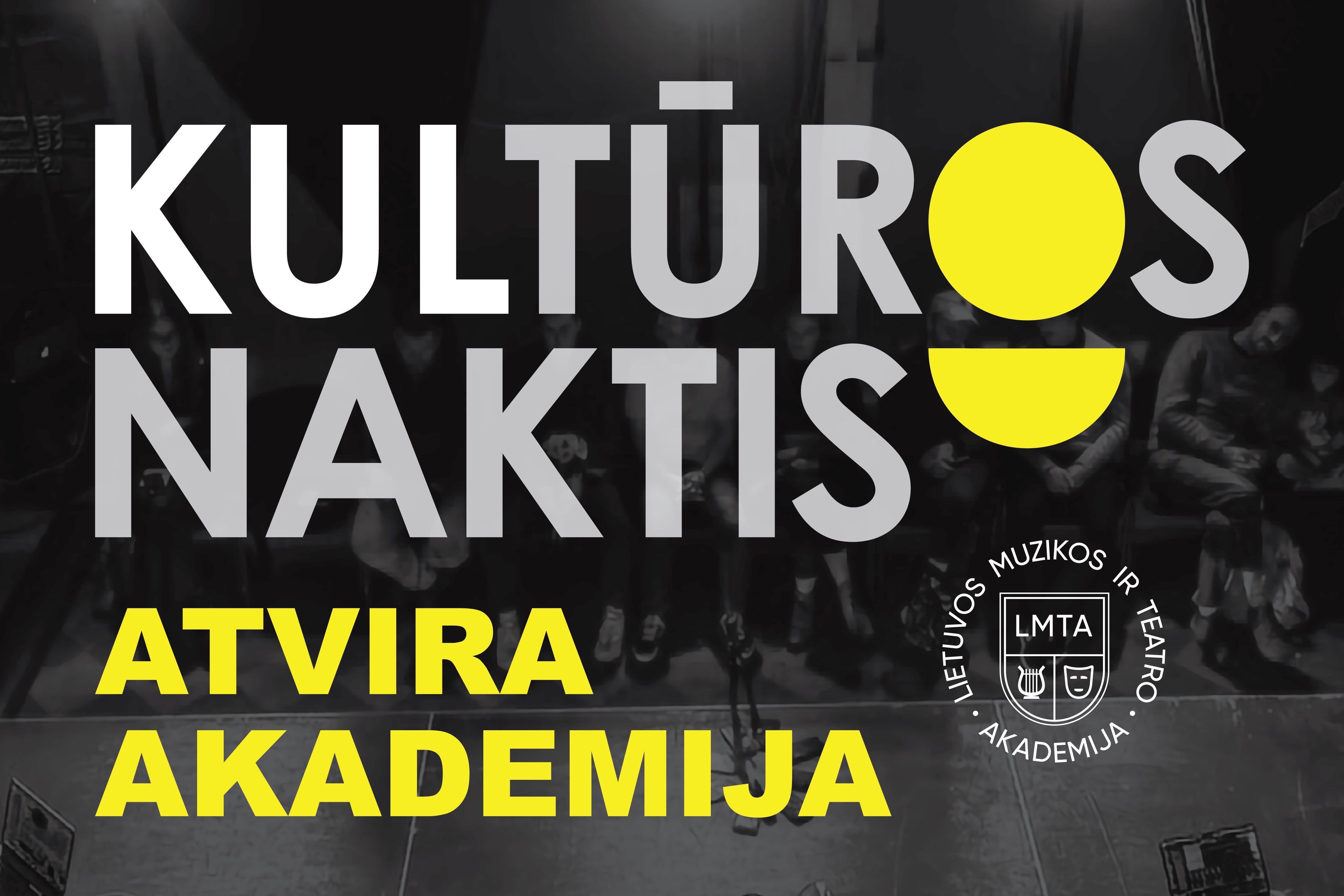
PIANO MUSIC NIGHT “JUODAIS BALTAIS” | CULTURE NIGHT 2026 – OPEN ACADEMY
June 12, 2026, Friday, 8 pm.–1 am.
Lukiškės Square, Vilnius
PIANO MUSIC NIGHT “JUODAIS BALTAIS” | CULTURE NIGHT 2026 – OPEN ACADEMY
8:00–11:30 p.m. – LMTA Piano Marathon
12:00–1:00 a.m. – recital by pianist Petras Geniušas
The unique piano music concert “Juodais Baltais” has continued its traditions since 2009, when LMTA professor Petras Geniušas gave a recital at Vilnius Lukiškės Square during the “Culture Night” festival, performing music by Ludwig van Beethoven. In 2011, young pianists – the most talented LMTA students and graduates – joined the project, and their solo performances have since become the core of the piano marathon programme.
Nurturing deep traditions of piano performance, the Lithuanian Academy of Music and Theatre presents the unique two-part project “Juodais Baltais” as part of the “Culture Night” programme, featuring performances by talented young LMTA pianists and laureates of international competitions.
The young LMTA pianists will perform some of the most beautiful piano opuses from the Romantic and Impressionist eras, while at midnight pianist Petras Geniušas will present a unique programme infused with improvisations and compositions from the Romantic era as well as the 20th and 21st centuries.
Organizer: Lithuanian Academy of Music and Theatre
Free admission. You are warmly welcome!
OPEN ACADEMY / Culture Night 2026
During “Culture Night”, the Lithuanian Academy of Music and Theatre opens its spaces to the city and invites audiences on a journey through music and theatre stretching from the halls and corridors of LMTA’s central building to Lukiškės Square and the new stage of the Theatre and Dance Faculty at the Study Campus. This year’s programme brings together different art forms, generations, and sound worlds – from Mozart’s music and experimental electronics to theatre and piano performances under the open sky.
At the beginning of the evening, visitors at the Academy will be able to discover a variety of musical experiences. In the J. Karosas Hall, audiences will have a rare opportunity to hear almost all of Wolfgang Amadeus Mozart’s songs for voice and piano performed on an authentic 18th-century fortepiano. At the same time, LMTA corridors will transform into a vibrant experimental music space, where the electronic music ensemble will perform an electronic version of Terry Riley’s minimalist composition In C, in which improvisation, pulse, and collective creativity create a different sonic experience every time.
Theatre also plays an important role in LMTA’s “Culture Night” programme. Audiences are invited to visit the new LMTA Theatre and Dance Faculty Hall on Olandų Street, where the performance The Little Witch will be presented. This warm, playful, and imaginative story about a young witch will become an invitation to discover the works of emerging theatre creators and the Academy’s new spaces.
Lukiškės Square will traditionally become the central point of the evening, hosting the piano music night “Juodais Baltais”. Since 2009, the project has become an inseparable part of “Culture Night” – featuring open-air performances by young LMTA pianists and, at midnight, a recital by Professor Petras Geniušas. This year, the concert will once again connect different Lithuanian cities – for the third time, “Juodais Baltais” will be livestreamed to six locations across Lithuania, expanding the piano music night beyond Vilnius.
This year’s LMTA programme invites audiences to experience the Academy as a vibrant, open, and constantly evolving cultural space, where music and theatre move beyond traditional stages into squares, corridors, and unexpected meeting places, and where one night becomes an opportunity to hear, see, and experience the Academy in an entirely different rhythm.
(ALMOST) ALL OF MOZART’S SONGS | CULTURE NIGHT 2026 – OPEN ACADEMY
June 12, 2026, Friday, 7:00–8:45 p.m.
Lithuanian Academy of Music and Theatre, J. Karosas Hall (Gedimino Ave. 42, Vilnius)
(ALMOST) ALL OF MOZART’S SONGS | CULTURE NIGHT 2026 – OPEN ACADEMY
As the cultural world celebrates the 270th anniversary of Mozart’s birth this year, LMTA students present (almost) all of the genius composer’s works for voice and piano. The intrigue of the concert – audiences will hear a rare instrument from Mozart’s own era, almost never heard in Lithuania.
Mozart’s songs are perhaps the least frequently performed part of his creative legacy. Yet even in these miniatures, Mozart’s genius is unmistakable. Listening not only to a few better-known songs but to the entirety of his vocal miniatures reveals the wide-ranging world of themes that fascinated the composer. Mozart, so often overflowing with joy, playful and light-hearted, can also be restrained, contemplative, didactic, philosophical, or even tragic.
During the concert, the singers will be accompanied not by a modern piano, but by a little-known historical instrument – the early piano, also known as fortepiano, pianoforte, or hammerflügel. Such instruments were built in late 18th-century Vienna by piano maker Anton Walter. Mozart himself performed on an instrument made by this master (the authentic fortepiano once owned by Mozart is preserved in a museum in Salzburg). Concert audiences will hear a copy of a 1796 Walter fortepiano, built by renowned contemporary specialist in historical keyboards, Paul McNulty.
Performers:
Singers:
Kamilė Globytė
Liepa Ribokaitė
Rūta Plučiūtė
Goda Zakarauskaitė
Vasilisa Agarkova
Sofija Ruginytė
Linas Drąsutis
Izabelė Švenčionytė
Saulė Šerytė
Pianists:
Augustė Pauliūtė
Elzė Kaziukonytė
Joris Mikužis
Kamilė Grigorčenkaitė
Aistė Bernotavičiūtė
Viltė Kanaporytė
Yana Serbina
Jonė Punytė-Svigarienė
OPEN ACADEMY / Culture Night 2026
During “Culture Night”, the Lithuanian Academy of Music and Theatre opens its spaces to the city and invites audiences on a journey through music and theatre stretching from the halls and corridors of LMTA’s central building to Lukiškės Square and the new stage of the Theatre and Dance Faculty at the Study Campus. This year’s programme brings together different art forms, generations, and sound worlds – from Mozart’s music and experimental electronics to theatre and piano performances under the open sky.
At the beginning of the evening, visitors at the Academy will be able to discover a variety of musical experiences. In the J. Karosas Hall, audiences will have a rare opportunity to hear almost all of Wolfgang Amadeus Mozart’s songs for voice and piano performed on an authentic 18th-century fortepiano. At the same time, LMTA corridors will transform into a vibrant experimental music space, where the electronic music ensemble will perform an electronic version of Terry Riley’s minimalist composition In C, in which improvisation, pulse, and collective creativity create a different sonic experience every time.
Theatre also plays an important role in LMTA’s “Culture Night” programme. Audiences are invited to visit the new LMTA Theatre and Dance Faculty Hall on Olandų Street, where the performance The Little Witch will be presented. This warm, playful, and imaginative story about a young witch will become an invitation to discover the works of emerging theatre creators and the Academy’s new spaces.
Lukiškės Square will traditionally become the central point of the evening, hosting the piano music night “Black on White”. Since 2009, the project has become an inseparable part of “Culture Night” – featuring open-air performances by young LMTA pianists and, at midnight, a recital by Professor Petras Geniušas. This year, the concert will once again connect different Lithuanian cities – for the third time, “Black on White” will be livestreamed to six locations across Lithuania, expanding the piano music night beyond Vilnius.
This year’s LMTA programme invites audiences to experience the Academy as a vibrant, open, and constantly evolving cultural space, where music and theatre move beyond traditional stages into squares, corridors, and unexpected meeting places, and where one night becomes an opportunity to hear, see, and experience the Academy in an entirely different rhythm.
OTFRIED PREUẞLER PERFORMANCE “THE LITTLE WITCH” | CULTURE NIGHT 2026 – OPEN ACADEMY
June 12, 2026, Friday, 7:00 p.m.
LMTA Study Campus Theatre Hall (Olandų St. 21A, Vilnius)
PERFORMANCE “THE LITTLE WITCH” (OTFRIED PREUẞLER) | CULTURE NIGHT 2026 – OPEN ACADEMY
Registration required:
https://docs.google.com/forms/d/e/1FAIpQLSdrmpNVkH4LMHmWZJrb-ZWtbdnauMXbiwe4P9fud2Zn2l38Sw/viewform
The performance based on Otfried Preußler’s fairy tale The Little Witch is a warm and educational story about a young witch who is only 127 years old and therefore considered too young to participate in the grand and extravagant witches’ celebration – Walpurgis Night.
Ignoring the prohibitions, she secretly attends the celebration, but is punished and given a task – to become a “good witch” within one year. At first, the little witch believes that being a good witch means mastering spells and following witches’ rules. Gradually, however, she realizes that true goodness lies not in magic, but in actions.
Together with her loyal raven companion Abraxas, she embarks on a journey full of adventures and lessons, helping ordinary people – punishing the unjust, defending the weak, and restoring justice. Unfortunately, this misunderstanding is revealed during an examination organized by the witches’ council, angering the old witches even more and leading to an even harsher punishment.
Yet, with her quick wit and playful character, she finds a way to outsmart the wicked old witches and bring only goodness into the world. The performance is filled with adventure, gentle humour, and wise lessons about responsibility, honesty, and the courage to be yourself.
Cast:
Morta Damaševičiūtė
Kasparas Lapėnas
Jurgis Vyrukaitis
Milana Kliukaitė
Nedas Baliukevičius
Dominykas Stulpinas
Arnas Daunoravičius
Kristupas Knispelis
Lauryna Šarlauskaitė
Nojus Žalys
Director
Morta Damaševičiūtė
Scenography:
Morta Damaševičiūtė
Kasparas Lapėnas
Lighting and sound designers:
Vilius Klimavičius
Nojus Šimkus
Matas Pranskevičius
Balys Švedas
OPEN ACADEMY / Culture Night 2026
During “Culture Night”, the Lithuanian Academy of Music and Theatre opens its spaces to the city and invites audiences on a journey through music and theatre stretching from the halls and corridors of LMTA’s central building to Lukiškės Square and the new stage of the Theatre and Dance Faculty at the Study Campus.
This year’s programme brings together different art forms, generations, and sound worlds – from Mozart’s music and experimental electronics to theatre and piano performances under the open sky.
At the beginning of the evening, visitors at the Academy will be able to discover a variety of musical experiences. In the J. Karosas Hall, audiences will have a rare opportunity to hear almost all of Wolfgang Amadeus Mozart’s songs for voice and piano performed on an authentic 18th-century fortepiano. At the same time, LMTA corridors will transform into a vibrant experimental music space, where the electronic music ensemble will perform an electronic version of Terry Riley’s minimalist composition In C, in which improvisation, pulse, and collective creativity create a different sonic experience every time.
Theatre also plays an important role in LMTA’s “Culture Night” programme. Audiences are invited to visit the new LMTA Theatre and Dance Faculty Hall on Olandų Street, where the performance The Little Witch will be presented. This warm, playful, and imaginative story about a young witch will become an invitation to discover the works of emerging theatre creators and the Academy’s new spaces.
Lukiškės Square will traditionally become the central point of the evening, hosting the piano music night “Black on White”. Since 2009, the project has become an inseparable part of “Culture Night” – featuring open-air performances by young LMTA pianists and, at midnight, a recital by Professor Petras Geniušas.
This year, the concert will once again connect different Lithuanian cities – for the third time, “Black on White” will be livestreamed to six locations across Lithuania, expanding the piano music night beyond Vilnius.
This year’s LMTA programme invites audiences to experience the Academy as a vibrant, open, and constantly evolving cultural space, where music and theatre move beyond traditional stages into squares, corridors, and unexpected meeting places, and where one night becomes an opportunity to hear, see, and experience the Academy in an entirely different rhythm.
TERRY RILEY “IN C” | CULTURE NIGHT 2026 – OPEN ACADEMY
June 12, 2026, Friday, 9:00–9:50 p.m. and 11:00–11:50 p.m.
Second Floor Corridor of the Lithuanian Academy of Music and Theatre (Gedimino Ave. 42, Vilnius)
TERRY RILEY “IN C” | CULTURE NIGHT 2026 – OPEN ACADEMY
The LMTA Electronic Music Ensemble will perform an electronic version of Terry Riley’s In C, inviting listeners into a constantly evolving sonic experience filled with collective freedom.
The electronic version of Terry Riley’s In C opens up a new perspective on one of the most important works in the history of minimalism. Through computer-generated sounds and improvisational structures, the composition becomes a continuously changing and renewing soundscape where pulse, repetition, and collective creativity merge together.
The aesthetics of electronic music further emphasize the openness and freedom of In C – every performance sounds different, and no two versions of the piece are ever the same.
Since 2019, the LMTA Electronic Music Ensemble has explored the boundaries of electronic sound as a creative laboratory of the LMTA Composition Department. The ensemble brings together students from various disciplines interested in electronic music performance, free improvisation, and the search for new forms of expression, often combining acoustic instruments with electronics.
This is a space where not only compositions are performed, but new approaches to music composition are discovered – a place where curiosity meets musical collaboration.
Artistic director:
Assoc. Prof. Dr. Jonas Jurkūnas
OPEN ACADEMY / Culture Night 2026
During “Culture Night”, the Lithuanian Academy of Music and Theatre opens its spaces to the city and invites audiences on a journey through music and theatre stretching from the halls and corridors of LMTA’s central building to Lukiškės Square and the new stage of the Theatre and Dance Faculty at the Study Campus.
This year’s programme brings together different art forms, generations, and sound worlds – from Mozart’s music and experimental electronics to theatre and piano performances under the open sky.
At the beginning of the evening, visitors at the Academy will be able to discover a variety of musical experiences. In the J. Karosas Hall, audiences will have a rare opportunity to hear almost all of Wolfgang Amadeus Mozart’s songs for voice and piano performed on an authentic 18th-century fortepiano. At the same time, LMTA corridors will transform into a vibrant experimental music space, where the electronic music ensemble will perform an electronic version of Terry Riley’s minimalist composition In C, in which improvisation, pulse, and collective creativity create a different sonic experience every time.
Theatre also plays an important role in LMTA’s “Culture Night” programme. Audiences are invited to visit the new LMTA Theatre and Dance Faculty Hall on Olandų Street, where the performance The Little Witch will be presented. This warm, playful, and imaginative story about a young witch will become an invitation to discover the works of emerging theatre creators and the Academy’s new spaces.
Lukiškės Square will traditionally become the central point of the evening, hosting the piano music night “Black on White”. Since 2009, the project has become an inseparable part of “Culture Night” – featuring open-air performances by young LMTA pianists and, at midnight, a recital by Professor Petras Geniušas.
This year, the concert will once again connect different Lithuanian cities – for the third time, “Black on White” will be livestreamed to six locations across Lithuania, expanding the piano music night beyond Vilnius.
This year’s LMTA programme invites audiences to experience the Academy as a vibrant, open, and constantly evolving cultural space, where music and theatre move beyond traditional stages into squares, corridors, and unexpected meeting places, and where one night becomes an opportunity to hear, see, and experience the Academy in an entirely different rhythm.
FESTIVAL “MIKROFEST VILNIUS 2026” AND SYMPOSIUM “MIKROTÖNE: SMALL IS BEAUTIFUL”
October 1-3, 2026
FESTIVAL “MIKROFEST VILNIUS 2026” AND SYMPOSIUM “MIKROTÖNE: SMALL IS BEAUTIFUL”
The Lithuanian Academy of Music and Theatre (LMTA), ISCM Lithuanian Section and the International Ekmelic Music Society Salzburg are pleased to announce a Call for Papers for the Symposium “Mikrotöne: Small is Beautiful” within the “Mikrofest Vilnius 2026” at the LMTA in Vilnius between October 1 and 3, 2026. “Mikrofest Vilnius 2026” will consists of lectures, workshops and concerts featuring Frank Stadler, Vytautas Germanavičius, Juhani Nuorvala, Elisa Järvi, Hossam Mahmoud and Agustin Castilla-Ávila, among others.
We invite submission of abstracts of up to 300 words. Papers may address the music of any period, concerning microtonal research issues such as tuning systems, historical aspects or new microtonal compositions. Demonstrations and lecture recitals are very welcome. Papers to be presented should be 45 minutes in length (35 min. presentation and 10 min. discussion).
Papers should be presented in person. Online papers might also be included at “Mikrotöne: Small is Beautiful” (to be decided by the commission).
Abstracts (in English) can be sent to castillaavila@hotmail.com
The language of the symposium is English.
Call for Papers deadline: May 15th, 2026
There are no congress fees. Participants are entitled to attend any presentations at the symposium.
For any questions, please contact Agustín Castilla-Ávila: castillaavila@hotmail.com
26TH INTERNATIONAL CONFERENCE “PRINCIPLES OF MUSIC COMPOSING: INTERACTION BETWEEN TECHNOLOGIES AND CONVENTIONS”
November 18–20, 2026
Vilnius, Lithuania
26TH INTERNATIONAL CONFERENCE “PRINCIPLES OF MUSIC COMPOSING: INTERACTION BETWEEN TECHNOLOGIES AND CONVENTIONS”
Lithuanian Composers’ Union / Lithuanian Academy of Music and Theatre
Special guest:
Prof. Panayiotis Kokoras, University of North Texas, US
The commodification and accessibility of technology is arguably one of the most significant sociocultural phenomena of the 21st century. Due to its ease of access, advanced technology has become an integral part of our everyday lives, reshaping not only society but also our modes of thinking. Composition, as a reflection of these transformations, has not merely been affected by technological progress but has become one of its artistic vanguards.
Various technological tools and the processes derived from them (acoustic analysis, sound synthesis, recordings, audio engineering, electronic modifications of acoustic sound and acoustic instruments, etc.) have become an integral part of contemporary creative practice. In addition, our knowledge about sound, its nature, possibilities of modification, and historical contexts continues to grow and shape our musical consciousness. How do this knowledge and technological tools affect music composition processes? What opportunities, challenges, and paradigms of thinking do they open up—or even impose upon us? How is the role of the composer changing in the era of technology and artificial intelligence?
Alongside technological innovations remain conventions—established aesthetic, stylistic, cultural, and academic norms shaped through the historical development of music. Musical conventions (principles, techniques, and norms of Western music composition) and modern technologies (closely related both to the development of electronic music and to compositional and performative practices of acoustic music) are interpreted here as inseparable factors whose interaction forms new principles of music composition.
The conference invites participants to explore the interaction between technological innovations and musical conventions, uncover possible tensions and syntheses between them, and reveal the challenges and opportunities arising from this interaction, enabling us to reconsider aesthetic, cultural, national, and other contexts and to form new identities.
Suggested sub-themes:
1. The interaction of modern technologies and musical conventions as a paradigm of contemporary music composition: theoretical, historical, and philosophical insights.
2. Types of interaction between modern technologies and conventions: sociocultural level, creative process, aspects of musical structure and technique, music production, reproduction, and reception.
3. Interaction between modern technologies and conventions in relation to different sound parameters: pitch, duration, loudness, timbre, etc.
4. The influence of digital and analogue sound processes on composition processes (sound synthesis, sound recordings, audio engineering, etc.).
5. The influence of non-musical technologies on composition processes (artificial intelligence, social media, multimedia, electronic devices, DIY practices, etc.).
6. Realization of the interaction between technologies and conventions in creative practice: theoretical and practical aspects.
7. The significance of the interaction between modern technologies and musical traditions for the dissemination of cultural, national, and ethnic musical features and identities.
Paper proposals (abstract and short biography) should be sent to:
pmc.lmta@gmail.com
Abstracts must not exceed 500 words. The approximate duration of presentations is 20–25 minutes.
The deadline for submitting proposals is September 12, 2026. All proposals will be evaluated by the scholarly committee, and applicants will be informed of the committee’s decision by the end of September.
The conference will be held in English. Participants will also have the opportunity to present online.
Participation fee* (only for selected participants):
In person – 30 €
Online – 50 €
*If you are unable to pay the participation fee, please contact us via email.
Disclaimer: Due to the ongoing geopolitical situation, proposals from scholars associated with institutions in Russia or Belarus will not be accepted.
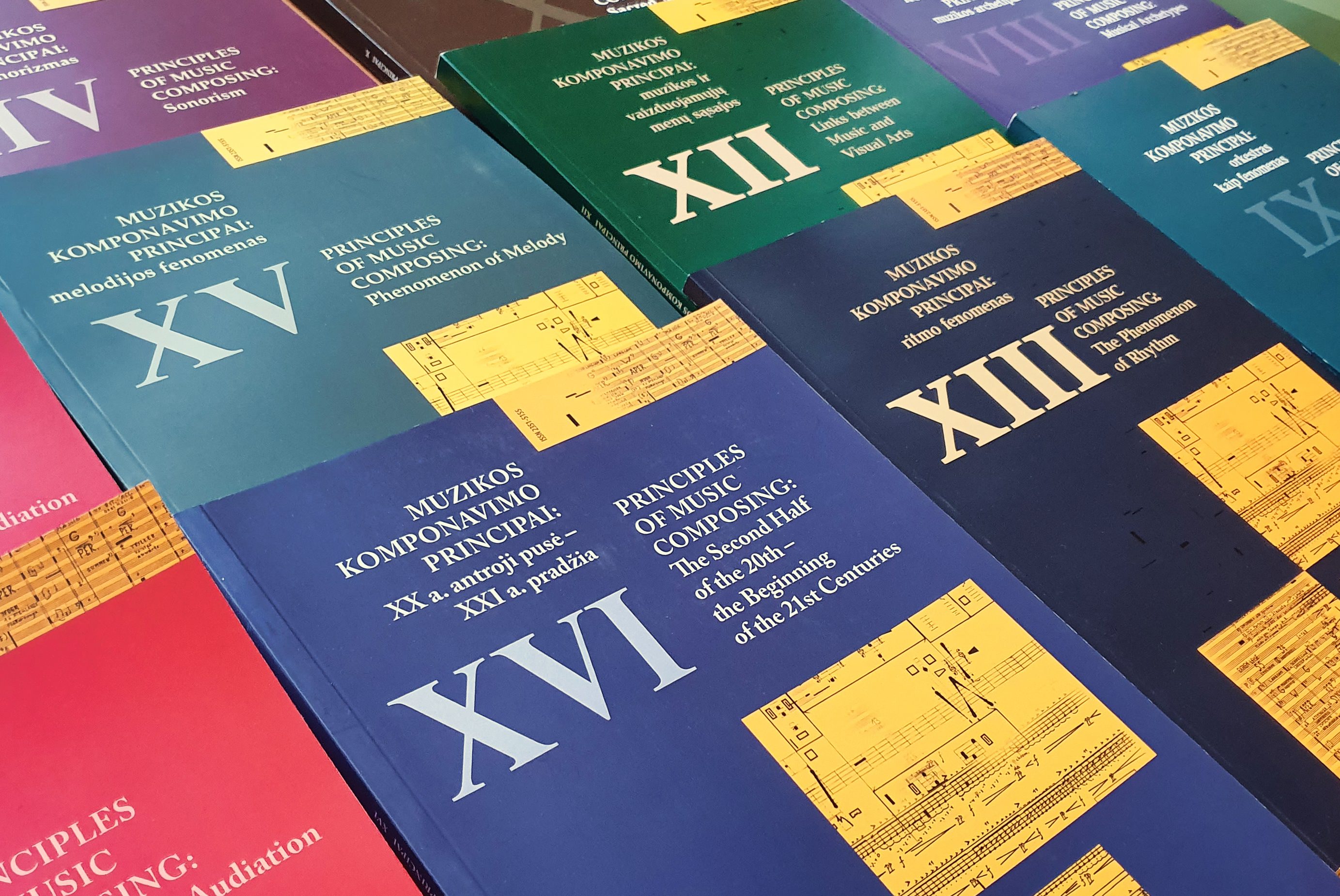
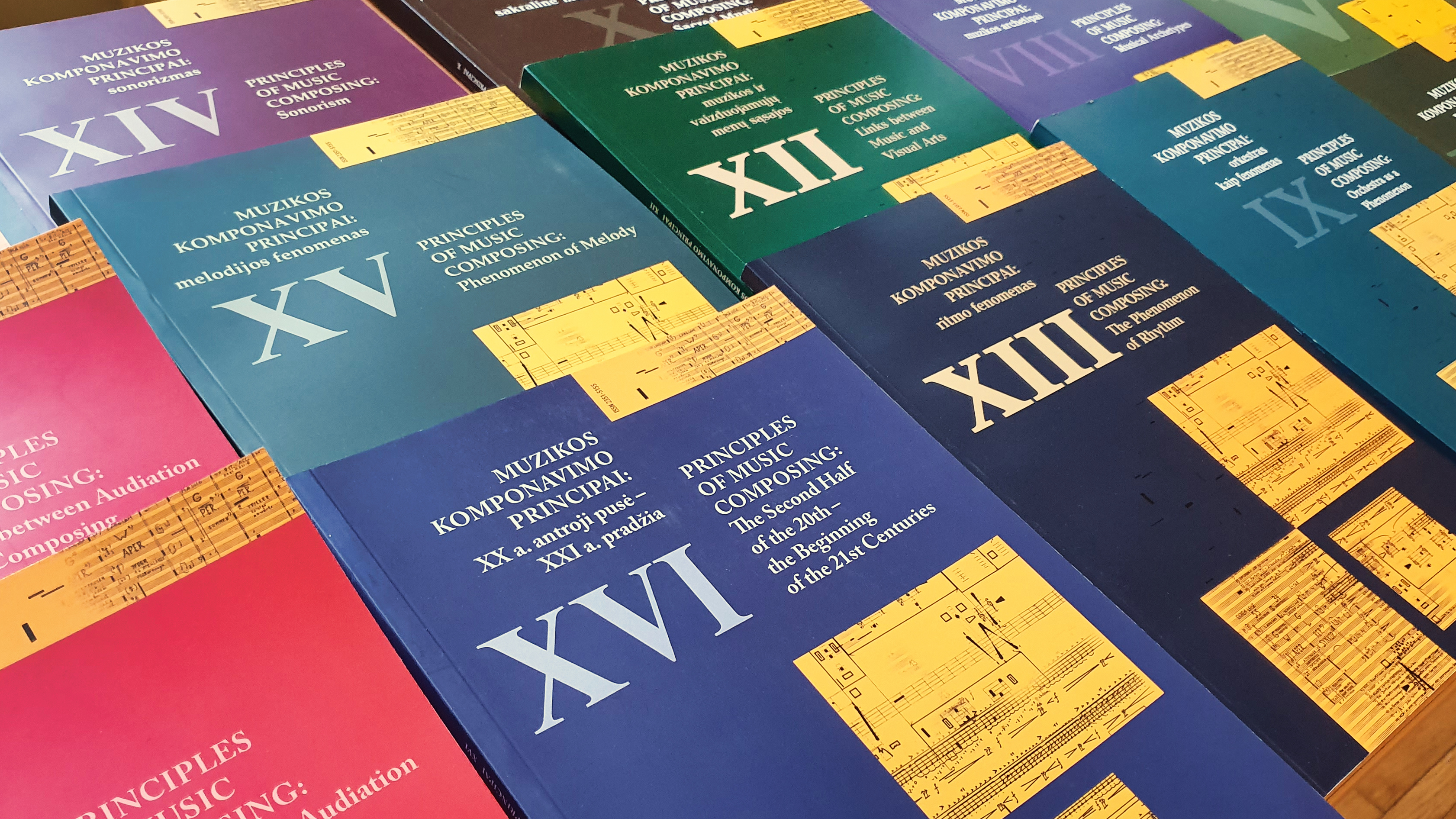
All conference participants will have an opportunity to submit articles based on their presentations for publication in the annual peer-reviewed journal “Principles of Music Composing”.